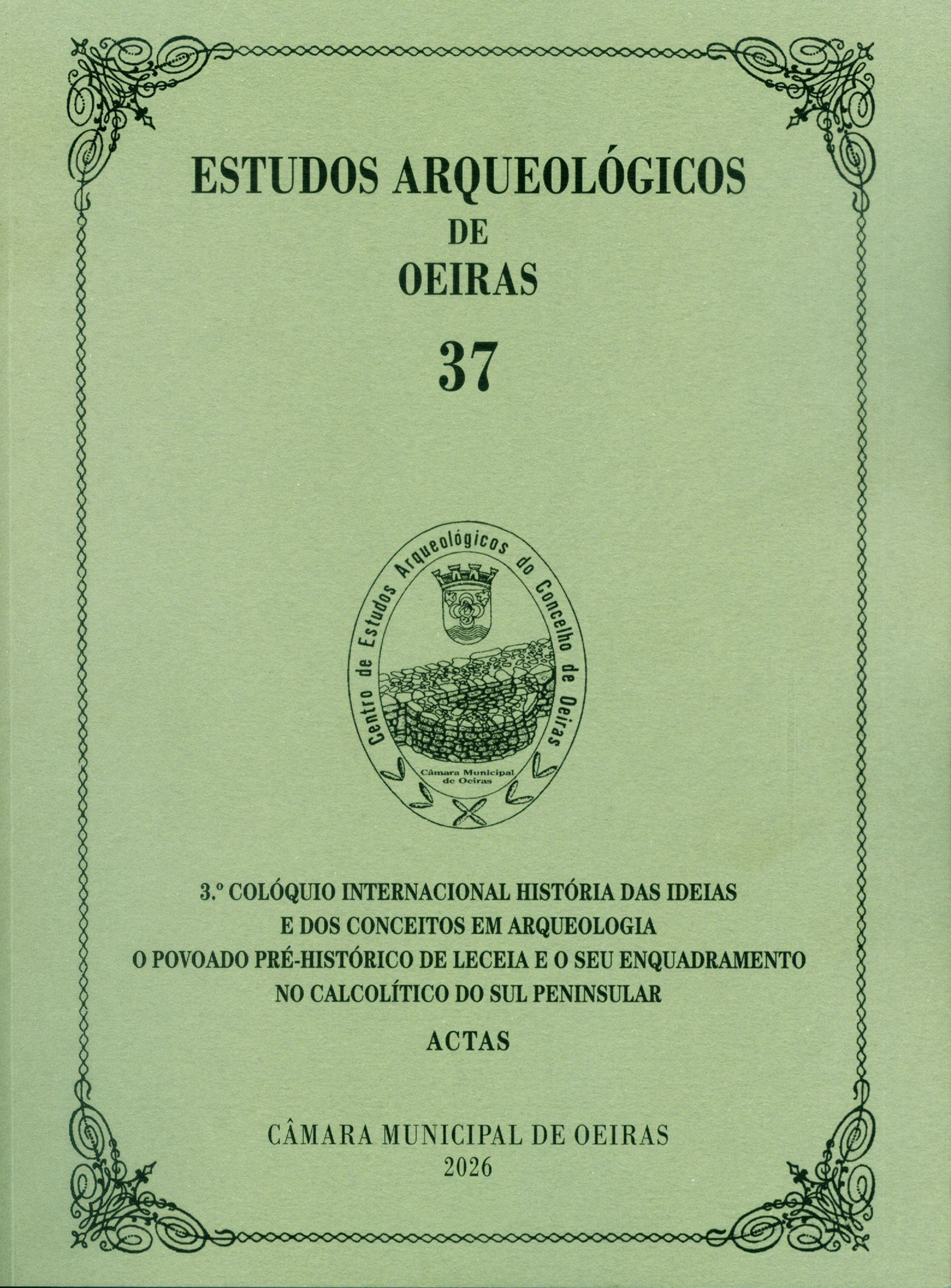
Vila Nova de São Pedro (Azambuja) e as paisagens calcolíticas do Ocidente peninsular – caixas de cosmética e alfinetes de cabelo – adornos de vivos, adornos de mortos
DOI: 10.5281/zenodo.19821138
Palavras-chave:
Vila Nova de São Pedro, Copper Age, Iberian Peninsula, Bone industry, Funerary mobilityResumo
In this article, the place of the fortified settlement of Vila Nova de São Pedro (Azambuja, Portugal) within the landscapes of the 3rd millennium BC in southwestern Iberia is discussed, based on two key categories of bone industry - cosmetic boxes and bone hairpins. These two categories of artefacts, typically recovered from funerary contexts, are, in the settlement of Vila Nova de São Pedro, as is the case of other elements of material culture, very abundant. A total of 45 fragments of cosmetic boxes have been documented, 17 of which display incised decoration and chromatic alteration of the surface, intentionally produced through the exposure of the pieces to different temperatures, revealing a remarkable mastery of pyrotechnological processes. At the same time, the bone hairpins, with a minimum number of 106 pieces, exhibit marked morphological diversity, with a clear predominance of items with fusiform heads. Mostly originating from necropolis contexts, their frequency at Vila Nova de São Pedro, together with the recovery of pieces in the process of manufacturing, reflects the workshop character of this site and at the same time opens up the possibility of their effective use in domestic contexts. Furthermore, the possibility that at Vila Nova de São Pedro these objects, produced there, were awaiting their incorporation into funerary rituals must also be considered. This hypothesis is difficult to demonstrate, since the necropolis (or necropolises) of this Chalcolithic settlement are not known, leading to the search in other funerary contexts for productions similar to those of Vila Nova de São Pedro. This allows for the consideration that, within the framework of funerary mobility - not demonstrated for several sites through strontium analyses of human remains - the dead from Vila Nova de São Pedro may have travelled considerable distances, even beyond the regional sphere. However, in the necropolises where cosmetic boxes and bone hairpins have been recovered, the use of pyrotechnology in the production of these black and marbled items is not attested, and the typological preferences - namely the predominance of fusiform-headed hairpins at Vila Nova de São Pedro - also do not coincide between this settlement and the contemporary necropolises. Several questions therefore remain open: whether cosmetic boxes and bone hairpins produced with the use of fire to obtain specific colours - white, black or marbled - were exclusively for dosmetic use, or whether this assemblage had a funerary function in as yet unidentified necropolises, questions that only future research will be able to answer.
Downloads
Publicado
Como Citar
Edição
Secção
Licença
Os artigos publicados são da exclusiva responsabilidade dos Autores.
É expressamente proibida a reprodução de quaisquer imagens sobre as quais
existam direitos de autor sem o prévio consentimento dos signatários dos artigos
respectivos.